
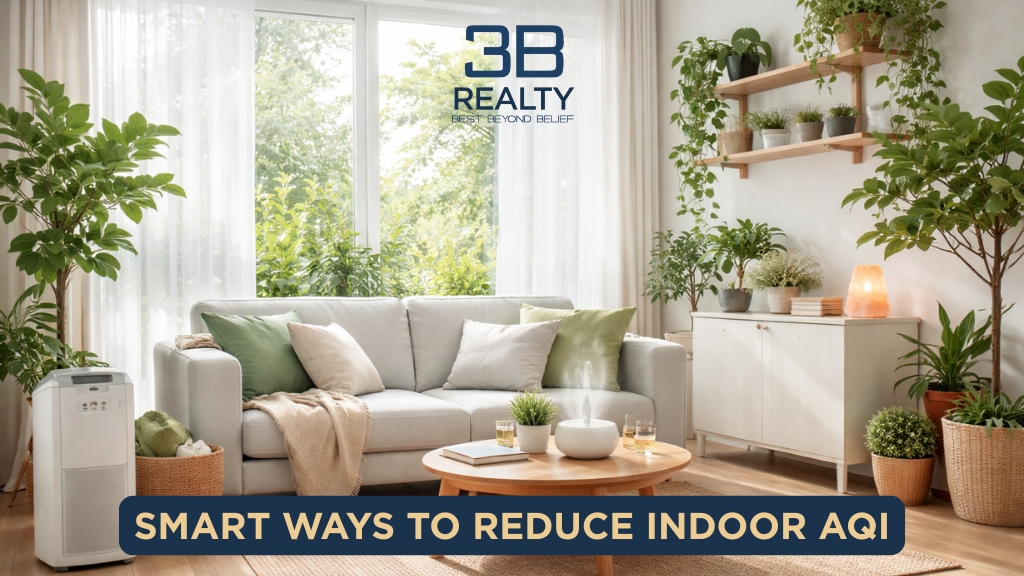
Air quality is often discussed as an outdoor problem, something we check on an app before stepping out. But the reality is quieter and much closer. The air inside a home is shaped less by the city and more by how that home is designed and lived in.
Across urban environments, especially in regions like Delhi NCR where density is constantly increasing, indoor spaces tend to hold onto air longer than we expect. When that air isn’t moving well or interacting with the right materials and light, it begins to affect comfort in subtle ways. Rooms feel heavier, spaces warm up unevenly, and freshness doesn’t last as long as it should. This is where the idea of a low-AQI home becomes relevant. Not as a technical benchmark, but as a lived experience where the space consistently feels breathable, balanced, and easy to live in.
Understanding a Low-AQI Home
A low-AQI home is designed to maintain clean, breathable indoor air by minimizing pollutants and maximizing natural air circulation. This involves reducing dust, harmful chemicals (like VOCs), and indoor contaminants while ensuring a steady flow of fresh air.
Such homes are built or modified with thoughtful design elements, right from layout planning and material selection to integrating greenery and smart technology. The goal is simple: create a space where every breath contributes to better health.
The Role of Airflow in Everyday Comfort
One of the most critical aspects of a low-AQI home is proper ventilation. Without adequate airflow, pollutants tend to accumulate indoors, making the air stale and unhealthy.
- Cross-ventilation allows fresh air to enter and circulate naturally
- Large windows and open balconies improve airflow and reduce humidity
- Exhaust systems in kitchens and bathrooms help remove pollutants
Designing your home to encourage natural airflow not only lowers AQI but also reduces dependency on artificial cooling systems, making it both healthier and energy-efficient.
Material Choices and Their Long-Term Impact
The materials used in your home play a significant role in determining indoor air quality. Many modern construction and furnishing materials release volatile organic compounds (VOCs), which can be harmful over time. To maintain a low-AQI environment:
- Opt for low-VOC paints and finishes
- Choose natural materials like wood, stone, and clay over synthetic alternatives
- Avoid chemically treated furniture and carpets
- Use eco-friendly adhesives and sealants
Thoughtful material selection ensures that your home remains toxin-free while also contributing to a more sustainable lifestyle.
Bringing Balance Through Natural Elements
Natural light, open corners, and the presence of greenery contribute to a home that feels more balanced. They introduce variation and prevent spaces from feeling sealed or artificial.
Indoor plants, in particular, play a quiet but important role here. Certain plants can help filter toxins and improve oxygen levels, creating a fresher indoor environment. Popular choices include Areca Palm, Snake Plant, Peace Lily, and Aloe Vera. Beyond air purification, plants help maintain a sense of freshness, support a more stable indoor atmosphere, and make spaces feel more relaxed and lived-in. Plants tend to thrive in spaces that are naturally ventilated and well-lit, making them less of a solution and more of an indicator of a healthier indoor environment.
Smart Use of Technology
Technology is playing an increasingly important role in maintaining healthy indoor environments. Smart solutions can help monitor and improve air quality in real time.
- Air purifiers with HEPA filters remove fine particles and allergens
- AQI monitors provide real-time data on indoor air quality
- Smart ventilation systems adjust airflow automatically
- Humidifiers and dehumidifiers help maintain optimal moisture levels
Integrating these technologies ensures that your home adapts dynamically to changing air conditions, offering consistent comfort and safety.
Designing Spaces That Support Wellness
A low-AQI home goes beyond just air quality, it’s about creating a holistic environment that supports overall well-being. Maximize natural light to reduce dampness and improve mood, maintain clutter-free spaces to reduce dust accumulation, incorporate open layouts for better air circulation, and use calming colors and textures for a soothing atmosphere.
Wellness-focused design encourages a healthier lifestyle, where your home becomes a space to relax, recharge, and thrive.
The 3B Realty Approach to Healthier Homes
As the demand for healthier living spaces continues to rise, forward-thinking developers are going beyond conventional design to create environments that actively support well-being. At 3B Realty, this vision is reflected in a conscious shift towards low-density planning, greener surroundings, and thoughtfully designed living spaces that promote cleaner air and a better quality of life.
Projects are conceptualized with a strong emphasis on open green landscapes, enhanced ventilation, and reduced environmental stress, allowing residents to experience fresher, more breathable surroundings every day. By integrating elements like expansive open areas, nature-led layouts, and future-ready infrastructure, 3B Realty is aligning modern living with the growing need for low-AQI environments.
This approach goes beyond just construction, it’s about creating communities where wellness is built into the foundation. With a focus on sustainable development and mindful design, 3B Realty is shaping homes that not only meet evolving lifestyle aspirations but also contribute to healthier, more balanced living.
Conclusion
A low-AQI home is not built through a single intervention. It is shaped by a series of decisions that work together quietly in the background.
When airflow is planned well, materials are chosen carefully, and spaces are allowed to interact naturally with light and air, the result is a home that feels consistently comfortable across seasons. Even small elements like indoor plants begin to play their part in such spaces, not as solutions, but as extensions of an environment that is already balanced and well-designed.
In fast-growing urban regions like Delhi NCR, this approach is becoming less of a preference and more of a necessity. Because beyond layouts and finishes, the real value of a home lies in how it supports everyday living, how it feels, how it breathes, and how effortlessly it adapts to the life inside it.