
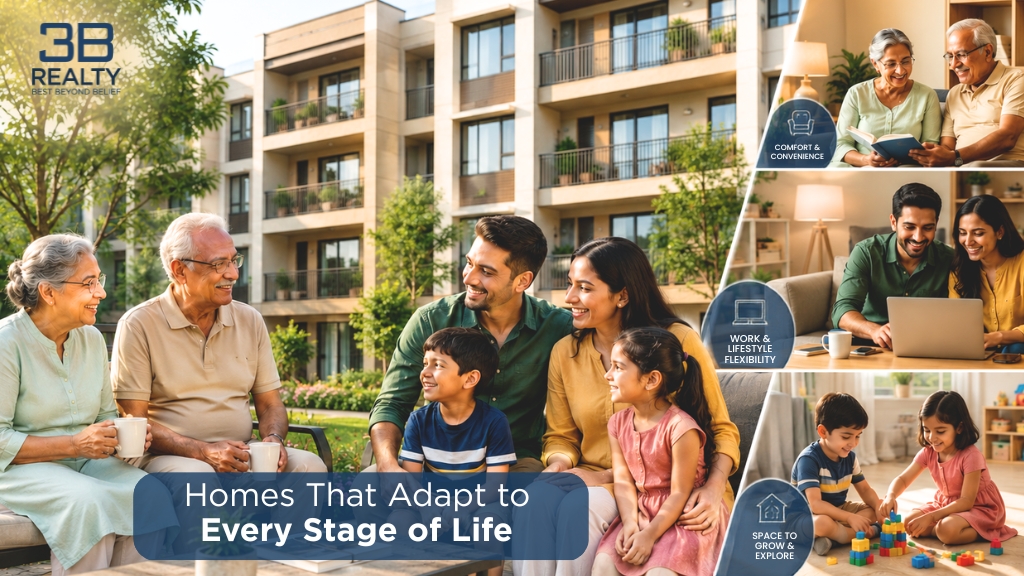
The way families live today is very different from how they lived a decade ago. Homes are no longer just places to return to at the end of the day. They have become workspaces, learning environments, family gathering zones and personal retreats all at the same time. As lifestyles continue to evolve, homebuyers are looking beyond conventional housing formats and searching for spaces that can adapt to changing family needs.
This shift has led to the growing popularity of flexible homes. Across emerging residential markets, homebuyers are increasingly choosing independent floors and spacious floor residences that offer greater freedom, privacy and functionality. At 3B Realty, we believe modern homes should do more than provide space. They should adapt to changing lifestyles, support growing families and offer long term comfort and usability. This shift is reflected in the increasing demand for homes that prioritize flexibility, privacy and functionality.
The concept of flexibility in housing is no longer viewed as an added advantage. It has become one of the most important factors influencing residential buying decisions and shaping the future of modern living.
Understanding the Growing Demand for Flexible Homes
A flexible home is designed to accommodate changing family structures and evolving lifestyle requirements. Whether it is a young couple planning for future expansion, parents living with children and grandparents, or professionals working remotely, flexibility allows a home to remain practical and relevant for years to come.
Modern homebuyers have become more thoughtful about how they use their living spaces. They want rooms that can serve multiple purposes, open layouts that encourage interaction, and enough privacy to support individual needs. This is where many homebuyers begin exploring residential options that offer greater flexibility, personalization and control over their living environment.
Adaptable homes provide the freedom to customize spaces according to family requirements without compromising comfort. The ability to adjust a home’s functionality over time makes it a smarter long term investment compared to properties that offer limited possibilities for future use.
Why Independent Floors Are Gaining Popularity
One of the strongest trends in today’s residential market is the increasing preference for independent floors. These properties offer many of the advantages of standalone homes while maintaining the convenience of organized residential communities.
Independent floors provide a unique balance between privacy and connectivity. Families can enjoy their own dedicated living spaces without dealing with the density and restrictions often associated with shared residential environments.
At 3B Realty, we understand why independent floors have become a preferred choice for modern homebuyers. The combination of privacy, ownership, and greater control over living spaces makes them particularly appealing to families seeking long term comfort. Separate entrances, reduced shared spaces and greater control over the living environment create a more comfortable and personalized residential experience.
For many families, independent floors represent an ideal middle ground between apartments and independent villas, offering the benefits of both while minimizing their limitations.
The Rise of Multigenerational Living in India
Family structures in India are evolving, but the importance of staying connected remains strong. More families are choosing multigenerational living arrangements where grandparents, parents, and children share the same property while maintaining their individual lifestyles.
This trend has accelerated the demand for larger and more adaptable homes. Families need residences that offer togetherness without sacrificing privacy. Spacious floor residences have become particularly attractive because they allow different generations to coexist comfortably under one roof.
Creating Space for Every Generation
Multigenerational living requires thoughtful space planning. Elderly family members may need quieter rooms and easy accessibility, while younger family members often require study areas, workspaces, and recreational zones.
Versatile living spaces make these arrangements possible by offering layouts that accommodate diverse requirements. Larger living areas, multiple bedrooms, separate utility spaces, and adaptable room configurations help create a harmonious environment where every family member feels comfortable.
At 3B Realty, we believe the best homes are those that bring families together while still providing room for personal space and privacy. Thoughtful layouts play an important role in creating that balance. Thoughtful planning and practical layouts help ensure that families can enjoy shared experiences without compromising personal space.
Family Friendly Homes Are Shaping Buying Decisions
Today’s homebuyers are evaluating properties based on long term family needs rather than immediate requirements. They are looking for family friendly homes that support everyday living while providing room for future growth.
The importance of family friendly design extends beyond square footage. It includes thoughtful layouts, natural ventilation, comfortable communal spaces, and the flexibility to adapt rooms for changing purposes over time.
Parents often consider how a home will accommodate children’s education, recreational activities, and future needs. Similarly, families planning for elderly parents want homes that can support accessibility and comfort without major modifications.
Flexible homes address these concerns by providing practical layouts that remain functional through different stages of life and changing household requirements. This adaptability reduces the likelihood of needing to relocate as circumstances change, making homeownership more stable and cost effective.
Spacious Floor Residences Offer More Than Just Size
While larger homes are often associated with luxury, the true value of spacious floor residences lies in functionality rather than sheer area.
Additional space allows homeowners to create dedicated zones for work, relaxation, entertainment, and family interaction. In an era where remote and hybrid work models have become common, having extra space has moved from being desirable to essential.
Adapting to Modern Lifestyle Needs
A spare room can become a home office today and a children’s room tomorrow. A family lounge can serve as an entertainment space during weekends and a study area during the week. This level of adaptability is one of the key reasons why modern homebuyers are placing greater importance on flexibility when selecting a residence.
Spacious floor residences also provide opportunities for future customization. As household needs evolve, homeowners can redesign interiors without being constrained by rigid layouts. This ability to adapt increases both the practical and financial value of the property over time.
Why Flexible Homes Represent a Smarter Real Estate Investment
Real estate decisions are increasingly influenced by long term usability. Buyers are looking beyond immediate aesthetics and focusing on whether a property can meet their needs for the upcoming years.
Flexible homes are well positioned to retain demand because they appeal to a broad range of buyer profiles. Young professionals, growing families, multigenerational households, and even investors recognize the benefits of adaptable living spaces.
Properties that offer flexibility are often more resilient to market shifts because they can serve multiple lifestyle requirements. This wider appeal enhances their long term desirability and investment potential.
Homes that appeal to multiple buyer profiles often enjoy stronger resale potential over time. Flexible layouts attract young professionals, growing families and multigenerational households alike, creating broader market demand. As urban residential preferences continue shifting toward larger and more practical living spaces, adaptable homes are better positioned to maintain relevance and value. For buyers seeking both lifestyle benefits and long term financial confidence, flexibility has become an increasingly important factor in real estate decision making.
At 3B Realty, we believe that the future of residential living lies in creating homes that respond to real life needs. The increasing popularity of independent floors, family friendly homes, and spacious floor residences reflects a deeper shift in how people define comfort, convenience, and long term value.
Why Flexibility Will Define the Future of Homeownership
The definition of an ideal home is changing. Homebuyers no longer want spaces that simply meet today’s requirements. They want homes that can adapt to future aspirations, family growth, lifestyle changes and evolving priorities.
Future ready residences offer exactly that. They provide the freedom to live comfortably today while remaining prepared for tomorrow. Whether through independent floors that enhance privacy, layouts that support multigenerational living, or spacious floor residences designed for versatility, these homes are becoming the preferred choice for modern families.
We understand that every family’s journey is different. The needs of a young couple, a growing family, and a multigenerational household are rarely the same, which is why flexibility has become such an important part of modern home design. The smartest homes are not simply designed for present day needs. They are planned to support comfort, functionality, and value for years to come, making them a more rewarding choice for modern homeowners.
As residential preferences continue to evolve, flexible homes will remain at the center of the future real estate landscape. For families seeking a home that offers adaptability, privacy, long term usability, and investment potential, flexibility is no longer just a feature. It is becoming the foundation of smarter homeownership.